

Female shopper with facial mask loads shopping cart. Source: DepositPhotos
By Ralph Tkatchuk
Coronavirus has forced a shift in shopping habits in Canada and beyond. Many people are opting for home deliveries of only essential items. And the retail food market has been affected in a number of significant ways.
Big brands like Sobeys have seen a marked increase in foot traffic. Visits to smaller local grocers have also increased.
But it’s the eCommerce sector that has experienced the fastest growth, with huge surges in online sales across the board in Canada.
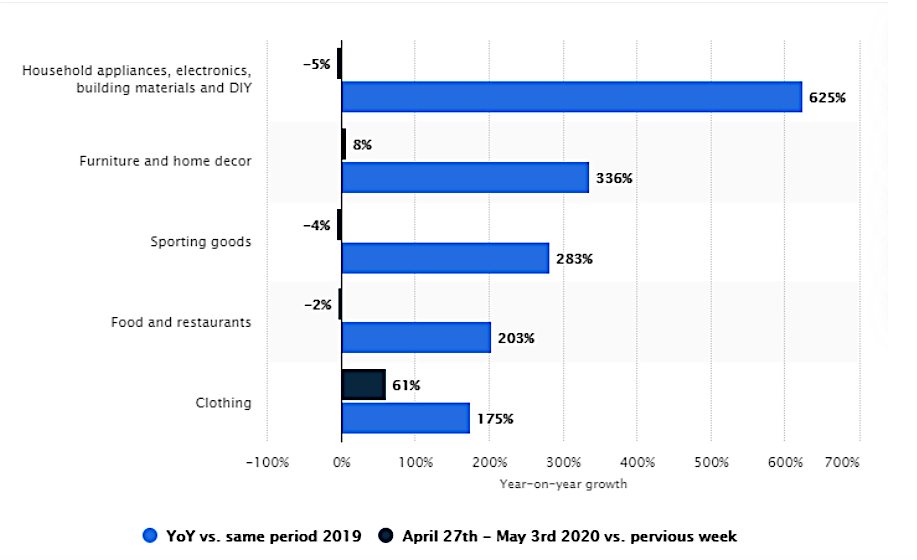
Source: Statista
In this post, we’re going to ask what this move online by consumers has meant for independent grocers. We’ll also look at the ways that they’ve responded to the new demand.
Coronavirus: Good or Bad for Grocers?
On the surface, the global surge in demand for food products seems like a good thing for grocers. And while more demand usually equates to more sales, the bigger picture is much more complex.
A large number of food retailers, both big and small, have found themselves ill-equipped to deal with hordes of new customers. A myriad of factors, from disrupted supply chains to diminished staff levels, have contributed to and compounded this central problem. Competition from larger companies that have the resources to be much more agile in their response has also presented a challenge.
To cope with greater online demand, cater to existing customers that are unable to shop in-store due to self-isolation regulations or vulnerability, and avoid losing out to competitors, grocers have started to sell through online portals.
Yet the technical demands of combining an eCommerce solution with a well-established brick-and-mortar operation are beyond the skillsets of most small business owners.
Certain tasks, including packing, shipping, inventory management, and so on, can only be completed by experienced employees. With most grocers shoring up financial assets to protect their businesses going forward, hiring new people is problematic or even impossible.
All of these challenges have led many managers and business owners to look for alternative solutions.
The Big Problem With Third-Party Marketplaces
Eager to leverage the opportunity for home deliveries but daunted by the prospect of building a bespoke eCommerce portal, many grocers have instead turned to third-party marketplaces like Instacart, Urbery, and Inabuggy (among others). All of these companies have benefited from increased demand in Canada, from both grocers and customers.
Yet marketplaces like these aren’t without their problems. Grocers are charged high fees in a sector that’s already operating on razor-thin margins. What’s more, by opting for a third-party solution, small companies are forgoing the chance to build their own customer bases while inadvertently adopting many of the issues already present in often-cumbersome platforms.
It’s also common for customers to blame problems with marketplaces on grocers. This “guilty by association” effect can detrimentally affect a small grocer’s reputation, leading to a stream of negative reviews and dissatisfied customers. There have even been reports of Instacart shoppers stealing people’s food.
What’s more, many grocers have come to see the opportunities offered by big players like Instacart as more of a curse than a blessing.
Instacart’s activity in the US, where it has nearly a 60% share of the grocery delivery market, is a cautionary tale. Inordinately high fulfillment fees have forced many well-known brands like Kroger to operate at a loss in the interests of maintaining customer loyalty.
For large corporations, this may be tenable, at least in the short term. Smaller grocers, however, will quickly find themselves in dangerous territory. The only solution is to raise prices for online purchases, which most business owners will be reluctant to do for a variety of reasons, including the risks of opening themselves up to competition, alienating existing customers, deterring new customers, and more. [gr]
Bridging the Tech Gap: How Can Grocers React?
One way that grocers have avoided issues associated with third-party platforms like Instacart is by opting for an intermediate solution. These solutions overcome many common problems without placing a heavy burden on busy grocers.
All-in-one eCommerce platforms are user-friendly apps that sit between third-party marketplaces on one side and completely bespoke solutions on the other.
They allow grocers to build online stores quickly and integrate them with existing infrastructure, including fulfilment networks, POS, marketing channels, and more, all with an absolute minimum of technical knowledge.
These tools have proven very popular among grocers. For example, a grocery eCommerce platform named Self Point has reported a significant uptick of nearly 300% in new users compared to the previous year.
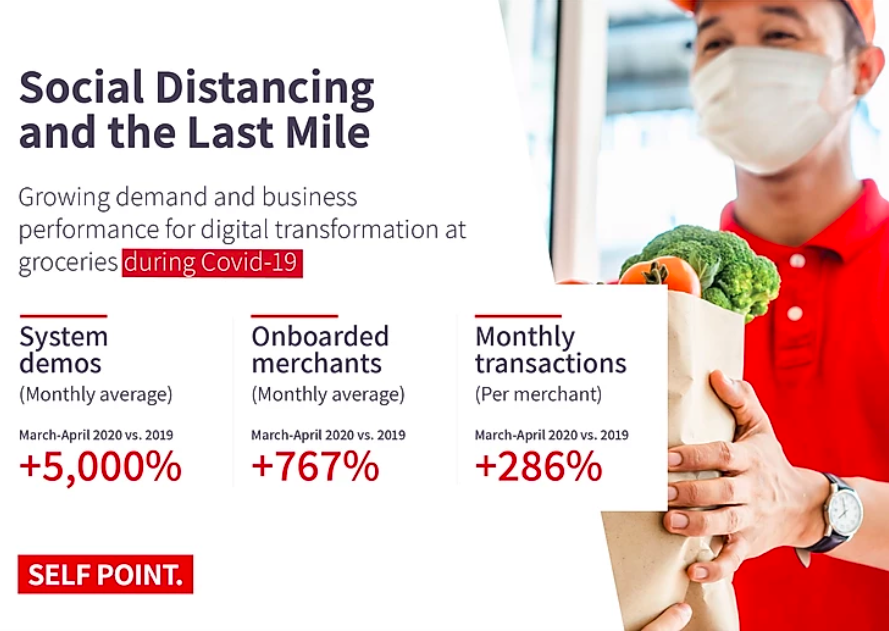
Source: Self-Point
The fact that integrations can be used to streamline time-consuming tasks like delivery, marketing, and customer service, with numerous options available, has also largely removed the need to hire new staff.
Conclusion
Building your business on a third-party platform is fraught with danger. In the vast majority of cases, the marketplace will own all your customers’ details. They have no reason to favour your store, and will often showcase better offers from your competitors. There’s also the possibility that issues that aren’t your responsibility will hurt your brand.
Moreover, companies like Instacart, Urbery, Inabuggy, and others, aren’t necessarily better-equipped than independent grocers to deal with problems caused by coronavirus. There have been reports of overstretched delivery teams and failures to process refunds.
While the long-term impacts of COVID-19 remain unknown, a broader shift to digital retail is likely. It’s important for grocers to embrace this change on their own and take advantage of new opportunities to increase sales volumes and revenues.

Ralph Tkatchuk is a freelance data security consultant and expert with over 9 years of field experience working with clients of various sizes and niches. He is all about helping companies and individuals safeguard their data against malicious online abuse and fraud. His current specialty is in eCommerce data protection and prevention. You can reach Ralph via Twitter (https://twitter.com/TkatchukRalph).