
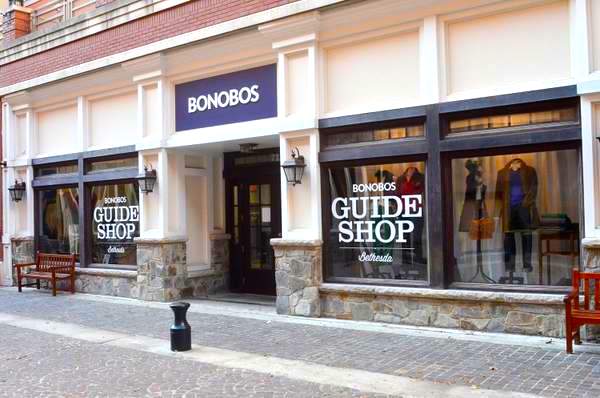

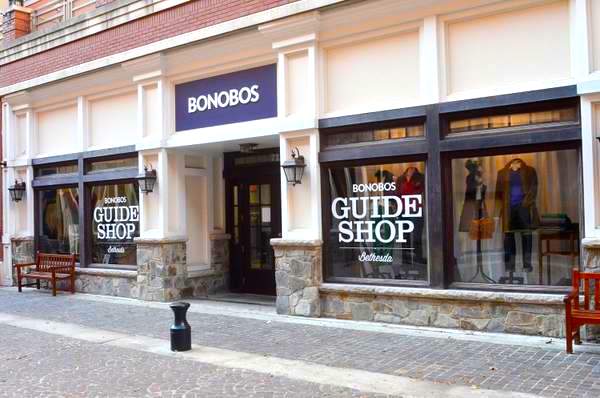
Photo: www.modernfellows.com
Amidst all the breathless pronouncements about the inexorable decline of brick and mortar retail emerges an interesting phenomenon: some of the fastest growing and most exciting internet-only brands are opening stores.
Recently, Bonobos raised $55MM largely to accelerate its foray into “Guideshops.” Other e-commerce innovators such as Warby Parker, Trunk Club, Nasty Gal and Bauble Bar are all expanding into physical store fronts. Expect more announcements soon, not only from earlier stage companies, but from larger direct-to-consumer brands as well. This seemingly counter-intuitive trend reflects a few realities.
First, most of these venture capital funded darlings have thrived in their first few years by exploiting a highly specific customer niche and leveraging the heck out of the advantages of a direct-to-consumer model. Alas, the number of customers who are willing to buy product sight unseen, without working directly with a sales person and lacking the instant gratification that physical stores provide, is comparatively small when it comes to product categories where fit, material quality and fabrication are important. For these brands to continue to grow–and have a chance for material profitability–physical locations aren’t a nice-to-do, they are a necessity.
Second, brick and mortar retail is different, not dead. In most product categories, for many, many years to come, the overwhelming majority of sales and profits will continue to come from, or be influenced directly by, physical locations. Regardless of whether a brand started as an actual store or as a virtual entity, the ones that will ultimately win will offer a tightly integrated experience across their various channels and touch-points. They will eschew traditional mass, one-size fits all strategies and embrace more personalized missions. There remains plenty of business to be done in brick and mortar locations–if you have something remarkable and meaningfully customer relevant.
Finally, when we think about the market or the customer we inevitably get it wrong. Global pronouncements about industry dynamics or the “typical” consumer are rarely particularly illuminating and almost never sufficiently actionable. The brands that are winning–the ones that are stealing share from you–go beyond the averages and the mega-trends. They understand how to apply technology to create frictionless commerce. They delve into data and apply customer insights that inform stronger acquisition, growth and retention tactics. They are committed to experimentation. They treat different customers differently. And on and on. None of this is fundamentally rooted in how a brand started or whether trends tend to favor its success.
Of course it’s far from certain that these previously web-only brands will successfully transition to an omni-channel world. Some will stumble mightily. A few will fail completely. Others will see their growth stall at only a handful of profitable locations.
The one thing for certain is that for quite a lot of customers, the benefits of physical shopping are here to stay. For traditional players the rush to close and down-size their store base may have some merit. But it’s equally likely the problem isn’t just the real estate portfolio.

Steven Dennis is a senior omni-channel retail executive and strategic growth advisor at SageBerry Consulting , LLC. . He is also a Former Chief Strategy Officer at Neiman Marcus. [More about Steven P. Dennis] Published with permission. This post originally appeared at Steven P. Dennis’ Blog on July 14, 2014. Copyright 2014. Follow Steven P. Dennis’ Blog on Twitter.
CANADIAN RETAIL NEWS: Tuesday, July 15, 2014 [News from around the web]


